Choosing cloud infrastructure in Brisbane is less about picking the best platform and more about putting each workload where it runs well and costs least. A finance system with steady demand, a website with seasonal peaks and an old application that cannot be rewritten all have different right answers. This guide explains the three options, how to decide between them, and what to ask a provider before you move anything.
The three options in plain terms
- Private cloud. Infrastructure dedicated to you, hosted in a provider's data centre. You pay for reserved capacity at a predictable monthly cost.
- Public cloud. Shared platforms such as Microsoft Azure. You pay for what you use, and capacity scales up and down on demand.
- Hybrid. A mix of both, with workloads placed on whichever suits them and managed as one environment.
On premises servers in your own office remain a fourth option. For some workloads, leaving them where they are is the correct answer for now.
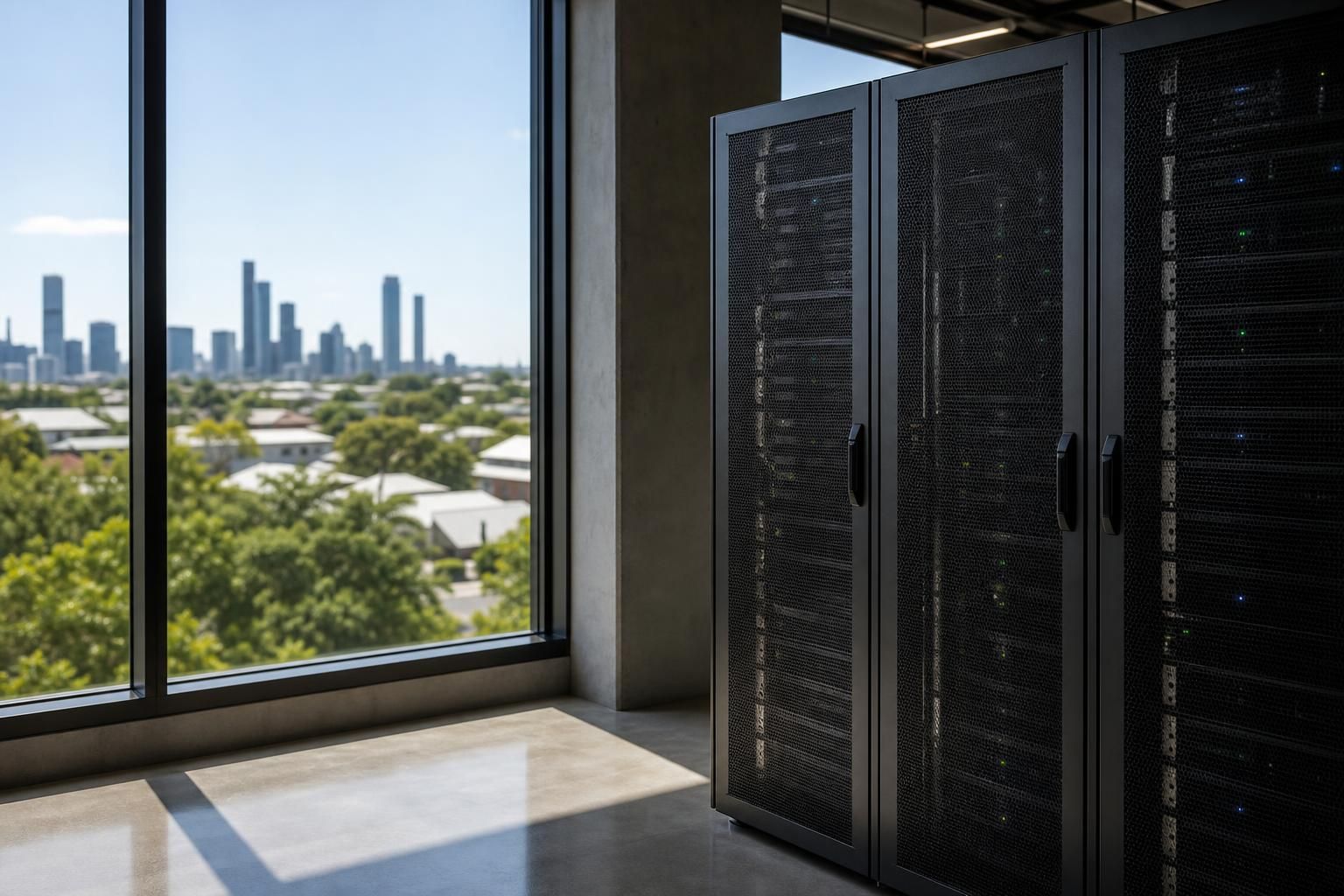
When private cloud fits
Private cloud suits workloads that are steady and predictable. If a server runs at similar load all day, every day, reserved capacity usually costs less than paying by consumption.
It also suits legacy applications. Software written for a traditional server often runs in a private cloud without changes, where a public platform might need it rebuilt. And it gives you a named Australian facility, which matters to organisations with data residency requirements.
When Azure fits
Microsoft Azure suits workloads with variable or growing demand. You can scale almost instantly and stop paying when demand falls. It suits new applications built for the cloud, and businesses already invested in Microsoft 365, because identity and security tools carry across.
Azure has Australian regions, so data can stay onshore. The trade off is cost control. Consumption pricing rewards attention and punishes neglect.

When hybrid fits
Most real businesses end up hybrid. The steady, legacy and sensitive workloads sit in private cloud, and the variable or modern ones run in Azure. The aim is one environment with unified backup, security and support, not two separate ones that happen to belong to the same company.
How to decide cloud infrastructure for a Brisbane business
Work through each workload with these questions.
- Is demand steady or variable? Steady favours private, variable favours public.
- Can the application run in public cloud without a rewrite? If not, private or hybrid.
- Where must the data live? Check contracts and regulations for residency terms.
- What happens if it is offline for a day? This sets the backup and recovery design.
- Who will manage it? A platform nobody is watching becomes expensive and insecure.
- What will it cost over three years, including migration? Compare totals, not monthly rates.
Do this per workload. A single answer for the whole business is usually wrong.
Costs that catch businesses out
- Data egress. Public platforms charge to move data out. Backups and reporting can generate more of this than expected.
- Idle resources. Test servers left running, oversized machines and unused storage add up month after month.
- Backup and disaster recovery. Often configured and charged separately in public cloud. Check whether it is included.
- Licensing. Moving servers can change what your software licences permit.
- Migration. The move itself is a project with its own cost and risk.
A provider should review your cloud bill with you regularly. Quarterly, in language a finance manager can follow, is reasonable to expect.
The honest caveat: cloud is not always cheaper
Many businesses move to public cloud expecting savings and find the bill higher than the servers it replaced. Lifting an old server into Azure unchanged often costs more than hosting it privately, because you are paying consumption rates for a workload that never scales down.
The benefits of cloud are real: resilience, flexibility and not owning hardware. Lower cost is only sometimes one of them. Any provider who promises savings before looking at your workloads is guessing. Sometimes the right advice is to leave a system where it is until it is due for replacement.
What to ask a cloud provider
- Will you recommend platforms you do not resell?
- Which Australian data centres would hold our data?
- Is backup and disaster recovery included, and how often is a restore tested?
- Who monitors the environment for security, and during what hours?
- How will you sequence the migration to avoid disrupting staff?
- How do we get our data out if we leave?
On the fourth point, cloud platforms work on a shared responsibility model. The platform secures the infrastructure, and you remain responsible for how your systems are configured and who can access them. The Australian Signals Directorate's cloud computing security guidance explains this split, and it is the area where most cloud breaches begin.
Does location matter for cloud?
Your data will sit in a data centre, not in an office, so the provider's street address matters less than where the facilities are and who can reach you when needed. For Brisbane businesses, low latency to east coast facilities and a team that can attend site during a migration are the practical considerations. For multi-site organisations, check that the same service desk supports every office.
For organisations that own hardware and want it in a professional facility, data centre co-location is the other route.
Frequently asked questions
What is the best cloud infrastructure for a Brisbane business?
The best choice depends on the workload, not the business. Steady and legacy workloads usually suit private cloud, variable and modern ones suit Microsoft Azure, and most businesses end up with a hybrid of the two.
Is private cloud more secure than public cloud?
Neither is more secure by default. Security depends on configuration, monitoring and access control. Private cloud gives you a dedicated environment and a named facility, which some compliance requirements prefer.
Does my data stay in Australia?
It does if you choose Australian data centres or Australian regions of a public platform and configure services accordingly. Ask the provider to name the facilities and confirm it in the contract.
How long does a cloud migration take?
A small migration takes weeks, and a complex multi-system one takes months. Good migrations are sequenced workload by workload so staff are not disrupted on a working day.
Should we move everything to the cloud?
Not necessarily. Some workloads are cheaper and simpler left where they are until the hardware or software is due for replacement. Decide per workload.
What to do next
List your main systems and answer the six placement questions for each. Then ask a provider to review the list with you. REDD's cloud computing team designs across private cloud, Azure and hybrid, backed by four Australian data centres, and will tell you when the answer is to stay put.