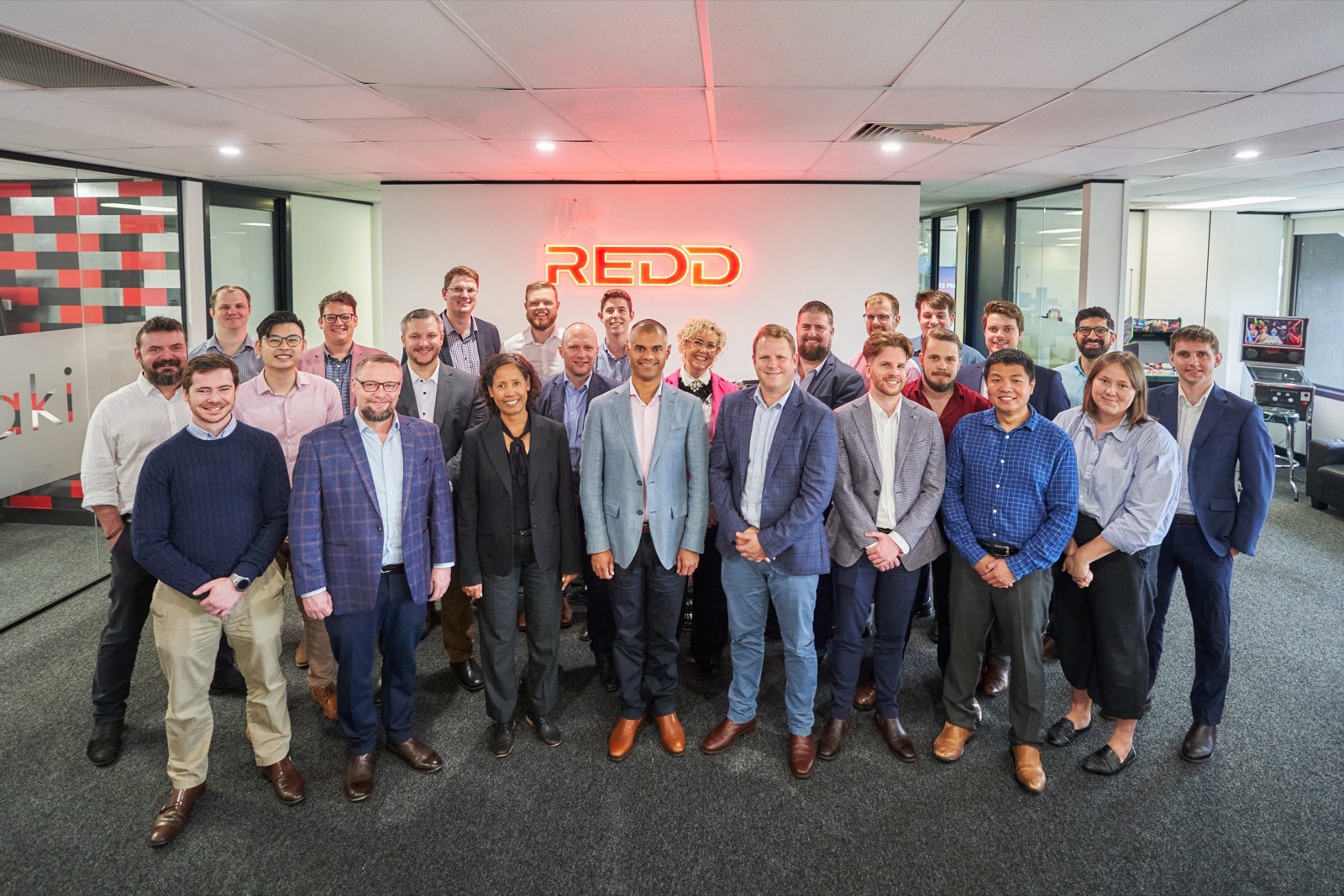
Fully managed, or co-managed alongside the internal people you already trust. A Brisbane-based help desk answering around the clock, engineers who know your environment by name, and one partner accountable for all of it.
Two ways to work with REDD
Most REDD clients start with an internal IT person and keep them. The model flexes around what you already have, not the other way round.
REDD runs the lot: help desk, devices, security, cloud, procurement and vendor management. You get a customer success manager, a virtual IT manager, and monthly reporting your board can read in five minutes.
Scope a fully managed service →Your internal team keeps what they do best. REDD adds 24x7 coverage, escalation depth, tooling and the specialist skills that are impossible to hire one of. No turf wars, one shared ticket queue.
Scope a co-managed service →Honest comparison
Most Brisbane businesses are running one of these four models. This is what each actually gives you, including where doing nothing is genuinely survivable.
| Capability | No IT supportAd hoc, whoever is free | Internal onlyOne person or a small team | Co-managedYour team plus REDD | Fully managedREDD runs it all |
|---|---|---|---|---|
| Cover outside business hours | Nobody. Issues wait until morning. | Your person is asleep, or on call unpaid. | REDD covers nights, weekends and leave. | 24x7 as standard, every day of the year. |
| Someone accountable when it breaks | Whoever is least busy. | One person, and a single point of failure. | Shared queue with defined escalation. | One partner, contractual response times. |
| Specialist skills (security, cloud, automation) | Bought in reactively at emergency rates. | Whatever your hire happens to know. | Specialists on tap alongside your team. | Full bench included in the service. |
| Security monitoring | None. Breaches are found by the customer. | Tools may exist. Nobody watches them at 3am. | SOC monitoring layered over your team. | 24x7 SOC, Essential Eight aligned. |
| Patching and maintenance | When someone remembers. | Competes with the ticket queue. | Automated and reported. | Automated, verified and reported monthly. |
| Cost profile | Nothing until something breaks, then a lot. | Salary, on-costs, leave, recruitment, turnover. | Predictable monthly fee plus your salary. | One predictable monthly fee. |
| What happens when your IT person leaves | Not applicable. | Knowledge walks out the door with them. | Documented with REDD, continuity retained. | No single point of failure exists. |
| Strategy and roadmap | None. | If they have time, which they do not. | Quarterly reviews and roadmap. | vIT manager and board-ready reporting. |
| Vendor and licence management | You are the middleman. | Another job on the same person. | Handled by REDD. | Handled end to end, licensing reviewed. |
Scroll the table sideways to compare all four models.
Co-managed is highlighted because it is where most REDD clients land, not because it is always right. If you have no internal capability, fully managed is usually the better answer, and we will say so.
What is included
Service levels are contractual and measured monthly, and you get the report whether we hit them or not.
How a transition works
Most of the pain in changing IT providers comes from a badly run handover. This is how REDD sequences it.
Week 1
Every device, licence, system and password documented, including what the last provider never wrote down.
Week 2
Monitoring and tooling deployed alongside the incumbent, so nothing is unsupported at any point.
Weeks 3 to 4
Support moves across in planned stages, sequenced so no critical system changes hands on a Friday.
Ongoing
Monthly service reporting, quarterly reviews, and a roadmap that gets revisited rather than filed.
Special Ops
REDD's Special Ops team takes on the hardest technical work: deep DevOps, security engineering, automation and Power Platform builds. The projects that have stalled twice before landing on our desk.
Common questions
Pricing is normally per user per month and depends on the level of cover, the complexity of your environment and whether you want fully managed or co-managed. Rather than quoting a headline rate that turns out to exclude half of what you need, REDD scopes it against your actual device and user count. Bring your current agreement and we will tell you plainly where it is strong and where it is thin.
Fully managed means REDD runs the entire function: help desk, devices, security, cloud, procurement and strategy. Co-managed means your internal people keep doing what they do best while REDD adds 24x7 coverage, escalation depth and specialist skills. Most REDD clients start with an internal person and keep them.
No. Co-managed exists precisely so you do not have to choose. We work in your ticketing system, escalate cleanly and hand back anything your team wants to own. The most common outcome is that your internal person stops firefighting and starts doing the work you actually hired them for.
A typical transition runs two to four weeks: documentation and access gathered, monitoring agents deployed, then a staged cutover sequenced so nothing breaks on a Monday morning. We manage the handover with the outgoing provider so you are not caught in the middle.
Yes, and beyond basic administration. Most environments we inherit have 365 switched on but not configured to anything like its full capability. Licensing is usually reviewed at the same time, and it commonly pays for a chunk of the engagement.
Response and resolution targets are contractual, vary by priority, and are measured monthly. You get the report whether we hit them or not, which is a deliberately uncomfortable commitment and the reason we make it.
Thirty minutes, no obligation. Bring your current agreement and we will tell you honestly where it is strong, where it is thin, and what the switch would actually involve.
Get in touch
Send the basics and a REDD engineer will come back to you within one business day. Prefer to talk? Call 1300 697 333.